
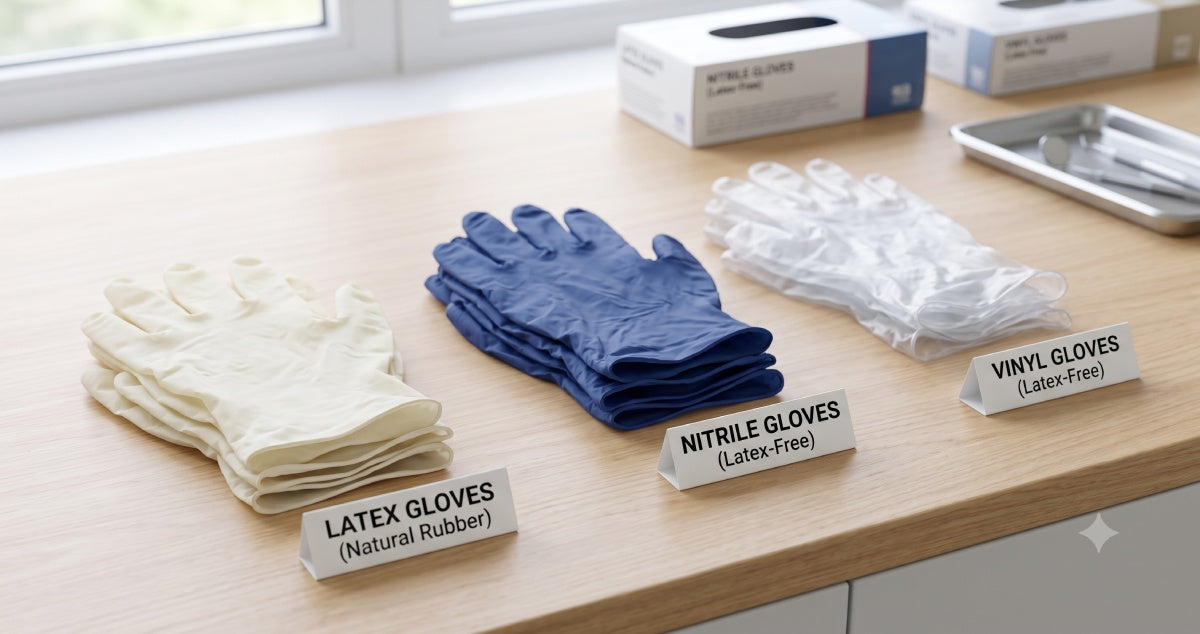
Not all disposable gloves offer the same protection. Choosing the right one isn't just about comfort — it can affect safety, durability, and even allergy risks.
Whether you're a healthcare professional, a caregiver, or simply stocking a home first aid kit, understanding the difference between latex, nitrile, and vinyl gloves can help you make the right choice with confidence.
Why the type of glove you choose matters
Disposable gloves may look similar, but the material they're made from can significantly affect how they perform. The right glove provides the protection you need while remaining comfortable enough to wear for the task at hand.
Whether you're changing a wound dressing, assisting a family member with personal care, preparing medical supplies, or handling cleaning tasks, choosing the appropriate glove helps reduce the risk of contamination, punctures, allergic reactions, and unnecessary glove changes.
The three most common disposable glove materials—latex, nitrile, and vinyl—each have their own strengths and limitations. Understanding those differences makes choosing the right glove much easier.
Latex gloves — strong protection, one big caveat
Latex gloves have been a trusted choice in healthcare for decades. Made from natural rubber, they provide excellent elasticity, a close fit, and exceptional tactile sensitivity. That's why many clinicians have traditionally preferred them for procedures requiring precision and dexterity.
Best for:
-
Procedures requiring maximum tactile feel and dexterity
-
Clinical environments where latex allergies are not a concern
The biggest drawback, however, is latex allergy. Sensitivity to natural rubber latex is more common than many people realize and can affect both healthcare workers and patients. Reactions range from mild skin irritation to potentially serious allergic responses.
Because of this, many healthcare facilities have reduced or eliminated routine latex glove use in favor of latex-free alternatives.
Bottom line: If no latex allergy exists and exceptional tactile sensitivity is essential, latex remains an excellent option. Otherwise, choosing a latex-free glove is often the safer decision.
👉 Shop latex gloves
https://medicalsupplygroup.com/collections/latex-gloves
Nitrile gloves — the most versatile all-rounder
Nitrile gloves have become the preferred choice across healthcare, caregiving, laboratories, and home medical care—and for good reason.
Made from synthetic rubber, nitrile gloves are completely latex-free while offering outstanding puncture resistance, durability, and chemical protection. They provide a fit and level of dexterity that's very close to latex, making them suitable for most everyday medical applications.
Best for:
-
General healthcare
-
Caregiving
-
Wound care
-
Handling bodily fluids
-
Extended wear
-
Anyone with latex allergies
Their greatest advantage is versatility. Because they combine strength, comfort, and allergy safety, nitrile gloves have effectively become the new standard in many healthcare settings.
Bottom line: If you're purchasing one glove type for healthcare, caregiving, or a home medical kit, nitrile is the safest and most practical all-around choice.
👉 Shop nitrile gloves
https://medicalsupplygroup.com/collections/nitrile-gloves
Vinyl gloves — lightweight and latex-free
Vinyl gloves are manufactured from PVC rather than rubber, making them another latex-free option. They're typically the most economical disposable gloves available and work well for brief, low-risk tasks.
Because vinyl is less elastic than latex or nitrile, these gloves don't conform as closely to the hand. They're also more likely to tear under stress and offer lower puncture resistance.
Best for:
-
Food preparation
-
Light cleaning
-
Short-duration, low-risk tasks
-
Situations where frequent glove changes are expected
They're generally not recommended for wound care, catheter care, handling bodily fluids, or procedures where a secure protective barrier is essential.
Bottom line: Vinyl gloves are an affordable option for everyday non-clinical use but aren't designed for higher-risk medical or caregiving situations.
👉 Shop vinyl gloves
https://medicalsupplygroup.com/collections/vinyl-gloves
Quick comparison: latex vs. nitrile vs. vinyl
|
Latex |
Nitrile |
Vinyl |
|
|
Latex-free |
✗ |
✓ |
✓ |
|
Puncture resistance |
High |
High |
Low–Medium |
|
Dexterity & fit |
Excellent |
Very good |
Fair |
|
Chemical resistance |
Good |
Excellent |
Fair |
|
Best for |
High-dexterity clinical tasks |
General healthcare & caregiving |
Light, low-risk tasks |
|
Cost |
Moderate |
Moderate |
Low |
How to choose the right glove for your situation
Choosing the right glove doesn't have to be complicated. Think about the task you'll be performing and whether durability, allergy safety, or cost matters most.
-
Wound care, catheter care, or handling bodily fluids? → Choose nitrile gloves, preferably exam-weight or heavier.
-
Known latex allergy in the household or workplace? → Choose nitrile or vinyl. Avoid latex completely.
-
Clinical procedures requiring maximum tactile sensitivity? → Latex gloves remain an excellent choice if no allergy risk exists.
-
Food preparation, general cleaning, or other low-risk tasks? → Vinyl gloves provide a practical, cost-effective solution.
-
Still unsure? → Nitrile gloves are the safest all-around recommendation for most healthcare, caregiving, and home-use situations.
Not sure which size or glove thickness is right for your needs? Our Handy Glove Guide makes it easy to choose the best option for your application.
👉 Handy glove guide
https://medicalsupplygroup.com/collections/handy-glove-guide-choose-the-right-glove
Shop medical gloves at Medical Supply Group
Whether you're purchasing gloves for a healthcare facility, caregiving, first aid, or everyday protection, Medical Supply Group offers trusted products from leading manufacturers in a variety of sizes, materials, and case quantities.
Browse our complete selection to find the right glove for every situation.
👉 Shop all gloves
https://medicalsupplygroup.com/collections/gloves
Disclaimer: This article is for educational and informational purposes only. Glove selection for clinical or medical procedures should follow the protocols of your healthcare institution or the guidance of a qualified healthcare professional.
Published by the Medical Supply Group Team | medicalsupplygroup.com
Questions? Call us at (800) 278-0227 or email info@medicalsupplygroup.com