
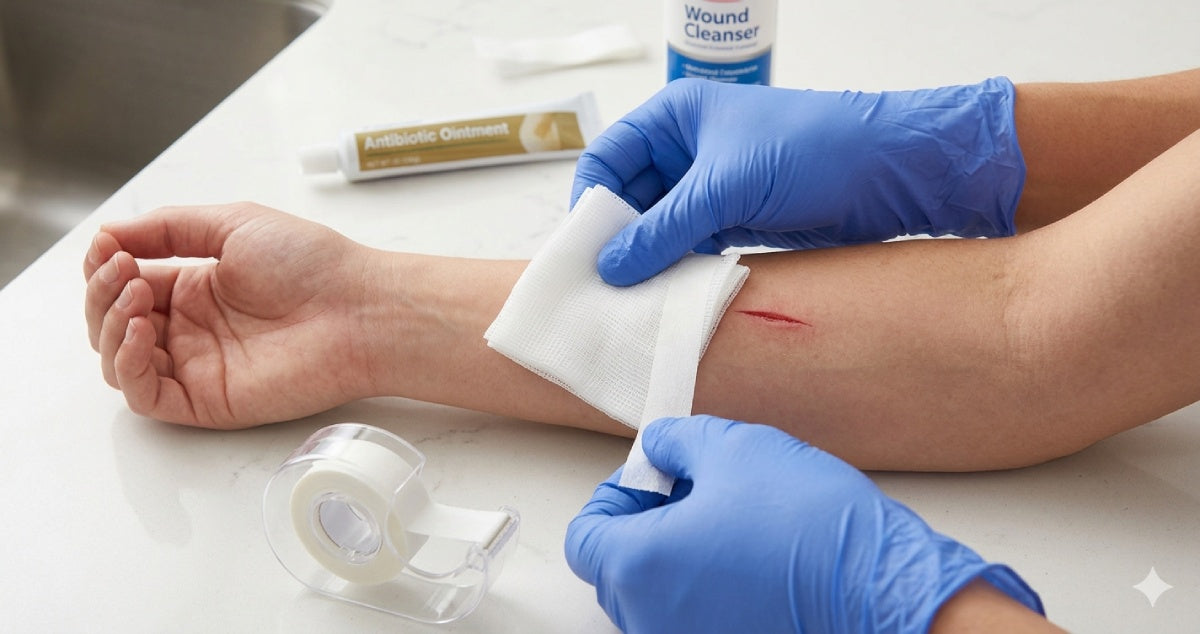
A small cut while slicing vegetables. A scrape from a weekend gardening project. A grandparent who needs a dressing changed after bumping into a table corner.
Most of us don't think much about wound care until we're standing in the kitchen or bathroom looking at a fresh injury and wondering, "What's the right thing to do now?"
The good news is that many minor cuts, scrapes, and abrasions can be treated safely at home with a few basic supplies and the right approach. The key is knowing how to clean the wound properly, choose the right dressing, and recognize when a simple injury needs professional medical attention.
This guide walks you through each step so you can care for minor wounds with confidence while avoiding common mistakes that may slow healing.
When is it safe to treat a wound at home?
Before reaching for the first aid kit, take a moment to assess the wound.
Home care is generally appropriate for:
-
Small cuts and scrapes from everyday activities
-
Shallow abrasions (road rash, minor friction wounds)
-
Small blisters that haven't opened
Go to an urgent care or emergency room if the wound:
-
Won't stop bleeding after 10–15 minutes of firm pressure
-
Is deep, gaping, or has jagged edges that may need stitches
-
Was caused by a puncture, bite, or sharp object that may have gone deep
-
Has debris that cannot be gently removed with rinsing
-
Is in a sensitive location — face, hands, or genitals
-
Involves a person with diabetes, circulatory issues, or a compromised immune system
-
Shows early signs of infection (increasing redness, warmth, swelling, or discharge)
When a wound falls into any of these categories, professional medical care is the safest choice. Don't second-guess yourself if something doesn't look right.
What supplies do you need?

Having the right supplies on hand means you're ready when something happens — not scrambling to find what you need.
A well-stocked home wound care kit includes:
-
Nitrile or latex-free gloves — always protect yourself before treating a wound
-
Sterile gauze pads (2×2 or 4×4 inch) — for cleaning and covering
-
Gauze rolls — for wrapping larger wounds or securing dressings
-
Nonadherent pads — ideal for raw or weeping wounds where sticking would cause pain on removal
-
Medical tape — to secure the dressing in place
-
Saline wound wash or clean running water — for rinsing
-
Adhesive bandage strips — for small, clean cuts
Shop these supplies:
Step-by-step: how to clean and dress a minor wound
-
Wash your hands, then glove up
Start with clean hands. Before touching the wound, wash thoroughly and put on a pair of nitrile or latex-free gloves. This simple step helps prevent bacteria from entering the wound. -
Control the bleeding
Place a clean gauze pad over the wound and apply steady pressure. Hold it in place for 5–10 minutes without lifting it to check. Giving the body time to form a clot is often all that's needed for minor bleeding. -
Rinse the wound
Run clean water over the area for a minute or two. This helps remove dirt, debris, and bacteria. Saline wound wash is another good option, especially for sensitive skin. -
Pat dry
Use a fresh sterile gauze pad to gently pat the wound dry. Avoid rubbing, which can irritate the tissue and slow healing. -
Choose the right dressing
Match the dressing to the wound: -
Small clean cut → adhesive bandage strip
-
Larger wound or abrasion → sterile gauze pad secured with medical tape
-
Raw, weeping wound → nonadherent pad to prevent painful sticking during dressing changes
-
Secure and date it
Apply the dressing so it stays in place comfortably without being too tight. Writing the date on the tape is a simple way to remember when the dressing was last changed.
How often should you change the dressing?
For most minor wounds, change the dressing every 1–2 days, or sooner if it becomes wet, soiled, or loose.
Each time you remove the dressing, gently rinse the wound and take a close look at how it's progressing. A wound that is healing normally should gradually appear cleaner and smaller over time.
If it looks unchanged — or worse — after several days, contact a healthcare provider.
Signs of infection — what to watch for
Most minor wounds heal without any issues, but it's worth knowing what to look for.
Contact your healthcare provider if you notice:
-
Redness spreading beyond the wound edges
-
Increasing warmth or swelling
-
Pus or unusual discharge
-
A wound that isn't improving after 1–2 weeks
-
Fever or chills
Do not wait or try to manage these signs at home.
Stock your home first aid kit
The best time to stock up on wound care supplies is before you need them — not after.
Medical Supply Group carries a full range of wound care essentials, from gauze pads and rolls to medical tape and first aid kits, available for fast nationwide shipping.
👉 Shop All Wound Care Supplies
Disclaimer: This article provides general educational information about basic wound care for minor injuries only. It is not a substitute for professional medical advice, diagnosis, or treatment. For wounds related to chronic conditions, surgical sites, diabetes, or any wound that concerns you, please consult a qualified healthcare provider promptly.
Published by the Medical Supply Group Team | medicalsupplygroup.com
Questions? Call us at (800) 278-0227 or email info@medicalsupplygroup.com