
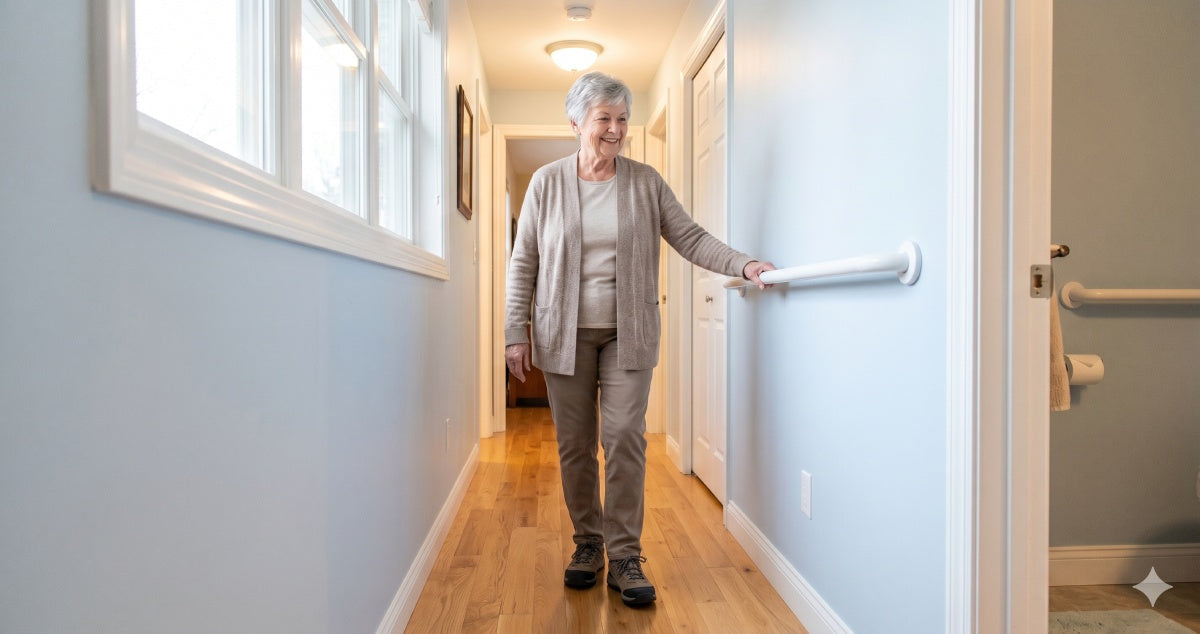
Have you ever noticed your parent pausing for a moment before stepping off the last stair or reaching for a countertop while walking through the kitchen? Small changes like these can be easy to miss, but they often signal something important: home safety deserves a closer look.
For many older adults, home represents comfort, independence, and familiar routines. It's where they feel most confident. Yet everyday spaces can become more challenging with age. A loose rug, poor lighting, a slippery bathroom floor, or even a cluttered hallway can quietly increase the risk of a fall.
According to the CDC, one in four adults aged 65 and older experiences a fall each year, making falls one of the leading causes of injury among seniors.
This room-by-room guide will help you identify common hazards, make smart safety improvements, and choose products that can support safer, more confident living at home.
· Important: This checklist is intended for general educational purposes only. If your loved one has experienced multiple falls, has balance issues, or has significant mobility challenges, consult a healthcare provider or physical therapist for a personalized assessment.
Why falls are more serious than they seem
Many people think of a fall as a single accident. In reality, one fall can have lasting consequences.
A fall may lead to an injury, reduced mobility, or a loss of confidence. Some older adults become fearful of falling again and begin limiting their daily activities. Over time, reduced movement can weaken muscles and balance, making future falls more likely.
Beyond physical injuries, falls can also affect emotional well-being. After a fall, some older adults become hesitant to move around the house or participate in activities they once enjoyed. They may walk less, exercise less, or avoid social activities altogether. Over time, reduced activity can weaken muscles and balance even further, increasing the likelihood of future falls.
The goal of fall prevention is not simply to avoid accidents. It’s about helping older adults maintain their independence, confidence, and quality of life for as long as possible.
It’s also worth remembering that many families only start thinking seriously about fall prevention after a close call. Taking action before an accident occurs is often the most effective approach.
The bathroom — the highest-risk room in the home
Bathrooms combine water, slippery surfaces, and limited space, making them one of the most common locations for falls.
A few simple improvements can make a significant difference.
Bathroom safety checklist
1. Install grab bars next to the toilet and inside the shower or bathtub.
2. Use a non-slip bath mat inside and outside the tub or shower.
3. Consider a shower chair or bathing bench for additional stability.
4. Add a raised toilet seat if standing up or sitting down has become difficult.
5. Improve lighting, especially for nighttime bathroom visits.
6. Remove clutter such as extra rugs, laundry baskets, and unused items from the floor.
One important reminder: towel bars are not designed to support body weight. Many people instinctively reach for them when they lose balance, but they can pull away from the wall under pressure.
Many families focus on the bathtub or shower but overlook the floor immediately outside it. Wet footprints on smooth tile can create a slipping hazard in seconds. A non-slip mat placed where someone steps out of the shower can provide extra stability and confidence during everyday routines.
Another helpful improvement is keeping frequently used toiletries within easy reach. Stretching, bending, or reaching awkwardly while standing on a wet surface can increase the risk of losing balance.
Products that may help
• Safety in the Bathroom — Full Collection
The bedroom — safety matters most at night
Many falls happen during night time trips to the bathroom when people are tired, moving quickly, or navigating in low light.
A bedroom that feels safe during the day may present different challenges after dark.
Bedroom safety checklist
1. Keep a clear path between the bed and bathroom.
2. Remove shoes, cords, and other trip hazards from the floor.
3. Install bed rails if getting in and out of bed is difficult.
4. Keep a lamp or light switch within easy reach.
5. Use nightlights in the bedroom, hallway, and bathroom.
6. Consider a bedside commode if frequent night time bathroom trips are becoming difficult.
7. Replace loose slippers with non-slip socks or supportive footwear.
Many caregivers are surprised by how often loose, backless slippers contribute to falls. Proper footwear can make a meaningful difference.
Night time conditions often make simple tasks more difficult. Poor lighting, grogginess, medications, and vision changes can all increase fall risk. Keeping essentials such as eyeglasses, a phone, medications, or a flashlight within easy reach can reduce unnecessary movement in the dark.
If your loved one regularly gets up during the night, motion-sensor lights can be another simple addition that improves visibility without requiring someone to search for a switch.
Products that may help
• Commodes
• Safety in the Bedroom — Full Collection
The living room and common areas
Living rooms, family rooms, and hallways are where most daily activities take place. While these spaces may seem harmless, clutter and poor lighting can quickly increase fall risk.
Living area safety checklist
1. Remove loose rugs or secure them with non-slip rug pads.
2. Rearrange furniture to create clear walking paths.
3. Keep electrical cords away from walkways.
4. Ensure chairs and tables are stable and easy to use.
5. Improve overhead lighting and replace dim bulbs.
6. Keep frequently used items within easy reach.
7. Consider a mobility aid if balance has become a concern.
A good rule of thumb is simple: if someone regularly reaches for furniture or walls while walking, it may be time to discuss additional support options.
It also helps to look at the room from a senior's perspective. Decorative footstools, magazine stacks, pet toys, and small pieces of furniture may seem harmless, but they can quickly become unexpected obstacles.
Creating clear, open pathways throughout frequently used areas can make movement safer and more comfortable throughout the day.
Products that may help
• Canes
• Walkers
Rollators can be particularly helpful because they provide support while also offering a built-in seat for rest when needed.
Stairs and entryways — often overlooked but high risk
Stairs require balance, strength, and good visibility. Even a small misstep can result in a serious injury.
Entryways present their own challenges, especially when shoes, bags, or outdoor debris create obstacles.
Stair and entryway safety checklist
1. Install sturdy handrails on both sides of staircases whenever possible.
2. Check that handrails are secure and free from damage.
3. Improve lighting at the top and bottom of stairs.
4. Mark stair edges clearly if visibility is poor.
5. Keep entryways free of clutter.
6. Store shoes, umbrellas, and bags in designated areas.
7. Repair uneven walkways, loose steps, or cracked surfaces outside the home.
For individuals using walkers or wheelchairs, a ramp may be a safer alternative than stairs in some situations.
Seasonal maintenance also matters. Wet leaves, rainwater, and outdoor debris can quickly turn entryways into slipping hazards. Regularly checking these areas helps keep them safe year-round.
What you wear matters too
Home safety is not only about the environment. Clothing and footwear also play an important role.
Loose slippers, oversized socks, and clothing that drags along the floor can all increase the risk of tripping.
For indoor use, non-slip socks provide additional traction on smooth surfaces and can be especially helpful during night time movement around the home.
When choosing footwear, look for:
• Closed-toe designs
• Non-slip soles
• Proper fit
• Good ankle support
Avoid footwear that slides off easily or lacks grip.
Comfort is important, but safety should come first. Even small footwear changes can help reduce everyday fall risks around the home.
Products that may help
When to consider a mobility aid
Many people hesitate when the topic of canes, walkers, or rollators comes up. Some view mobility aids as a sign of losing independence. In reality, the opposite is often true.
A properly fitted mobility aid can help someone stay active, confident, and independent for longer. Many healthy and active older adults use a cane or walker simply because it provides additional stability and reduces the risk of injury.
Choosing extra support is often a practical decision, not a limitation.
If you notice frequent stumbling, difficulty standing from a chair, slower walking speed, reduced balance, or increased hesitation while moving around the home, it may be worth discussing mobility support with a healthcare professional.
The right mobility aid should help a person continue doing the things they enjoy—not prevent them from doing them. In many cases, people feel more confident and secure once they begin using the appropriate aid.
Products to explore
• Canes - single-point and quad options
• Walkers
• Rollators — wheeled walkers with a built-in seat
Creating a fall prevention plan as a family
Fall prevention works best when family members, caregivers, and older adults work together. Instead of trying to make every change at once, focus on one room at a time.
Start with the bathroom and bedroom, where many falls occur, and then move on to hallways, living spaces, and entryways. Small improvements completed consistently are often more effective than a long list of changes that never gets started.
Most importantly, involve your loved one in the process. Safety upgrades are easier to accept when they support independence and comfort rather than feeling restrictive.
Having open conversations about safety can also reduce resistance to change. When people understand that the goal is to maintain independence rather than limit it, they are often more willing to accept helpful modifications.
A safer home starts with small changes
Fall prevention doesn't require a complete home renovation.
Simple improvements such as installing grab bars, improving lighting, removing trip hazards, and choosing appropriate footwear can significantly reduce risk.
The goal is not to make a home feel clinical or restrictive. It's to create an environment where older adults can move confidently, maintain their independence, and continue enjoying daily life safely.
Even a few small changes today can help prevent a serious accident tomorrow.
For assistance selecting fall prevention and mobility products, the Medical Supply Group team is available to help.
* Bed Safety & Comfort Products
Frequently asked questions
What's the single most effective fall prevention change I can make?
Many experts recommend starting with two simple steps: installing grab bars in the bathroom and removing loose rugs. These changes address some of the most common causes of household falls.
How do I know if my loved one is at higher risk of falling?
Warning signs may include unsteady walking, difficulty standing from a seated position, holding onto furniture while moving, or a history of previous falls. A healthcare professional can provide a formal fall-risk assessment.
Are non-slip socks effective?
Yes. Non-slip socks can improve traction on smooth indoor surfaces and are often recommended as part of a broader fall-prevention strategy, especially for older adults who spend significant time walking around the home.
References
• CDC STEADI Fall Prevention Program
• UChicago Medicine: Fall Prevention and Senior Safety Resources
Disclaimer
This article is for general educational and informational purposes only and does not constitute medical or safety advice. Every individual's situation is unique. Please consult a physician, physical therapist, or occupational therapist for a personalized fall risk assessment.
Published by the Medical Supply Group Team | medicalsupplygroup.com
Questions? Call us at (800) 278-0227 or email info@medicalsupplygroup.com