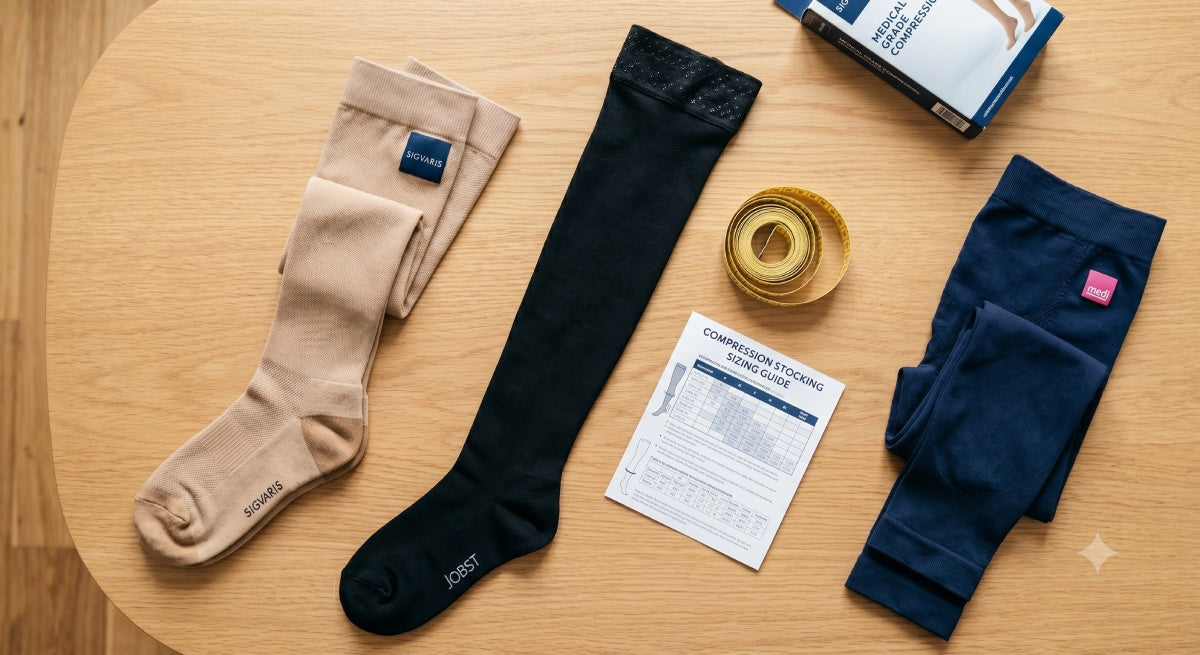
After a long day on your feet, do your legs feel heavy, tired or slightly swollen? Whether you are a nurse finishing a busy shift, a frequent traveler or someone who spends hours standing each day, that feeling is more common than you might think. Compression stockings and socks can help, but choosing the right pair is not always straightforward. This guide explains how they work, who may benefit, what the compression levels mean, how to measure and put them on, and how long to wear them. It features Jobst and other BSN Medical compression products from our range.
Compression stockings at a glance
- What they do: apply graduated pressure, strongest at the ankle and easing up the leg, to support circulation and comfort.
- Levels: 8 to 15 mmHg (mild), 15 to 20 (moderate), 20 to 30 (firm) and 30 to 40 (extra firm).
- Where to start: many people begin with 15 to 20 mmHg for everyday support. Higher levels are usually chosen with a healthcare provider.
- Fit matters: measure your ankle and calf in the morning and check the product’s size chart.
- Always: follow your healthcare provider’s advice if you have a circulation condition, diabetes or a prescription for compression.
What do compression stockings actually do?
Compression stockings are specially designed garments that apply graduated pressure to the legs. The pressure is strongest at the ankle and gradually decreases as it moves upward. Think of it as a gentle helping hand for your circulation. This graduated design encourages blood to move more efficiently toward the heart rather than collecting in the lower legs.
Many people notice that long hours of standing, sitting or traveling can leave their legs feeling swollen, achy or fatigued. Compression stockings are designed to support healthy circulation and improve comfort in these situations. Medical-grade compression stockings differ from ordinary tight socks: they are designed to deliver specific levels of pressure measured in mmHg, which is why choosing the correct level matters.
Compression stockings for varicose veins, swelling and tired legs
Varicose veins
Healthcare providers commonly recommend compression stockings to help ease symptoms such as aching and heaviness. Stockings help manage symptoms, but they do not remove or cure varicose veins.
Swelling
Compression may help reduce everyday leg swelling. Swelling that is sudden, in one leg only, or painful needs medical attention, not a stocking.
Tired, achy legs
Mild to moderate compression is popular for long shifts, standing and travel.
Who should consider wearing compression stockings?
Compression stockings are not only for hospital patients or older adults. Many people use them as part of their everyday routine.
- People who stand for long hours: healthcare workers, teachers, retail staff, restaurant staff and warehouse workers often finish a shift with tired, heavy legs.
- Frequent travelers: long flights and road trips limit movement for hours, and compression stockings are commonly worn to support circulation and comfort.
- People managing swelling or varicose veins: providers often suggest compression as part of an overall management plan.
- Pregnant women: pregnancy can increase swelling in the feet and legs. Many women choose compression for added comfort after talking to their provider.
- People recovering from surgery: the surgical team typically recommends the appropriate level.
- Everyday preventive support: many healthy adults wear mild or moderate compression before long workdays or extended travel.
Compression levels explained
Compression strength is measured in millimeters of mercury (mmHg). A higher number means a higher level of pressure.
| Level | Often used for | Examples from our range |
|---|---|---|
|
8 to 15 mmHg Mild |
General comfort and occasional leg fatigue | SensiFoot support socks, Jobst for Men socks, UltraSheer thigh high and pantyhose |
|
15 to 20 mmHg Moderate |
Travel, long shifts and minor swelling. A common first choice. | Jobst UltraSheer knee high |
|
20 to 30 mmHg Firm |
More noticeable swelling or varicose veins. Provider guidance is recommended. | Relief therapeutic knee high and thigh high, men’s ribbed knee-high socks |
|
30 to 40 mmHg Extra firm |
More serious venous conditions, selected under medical supervision | Ask our team |
Types of compression stockings

Different styles are designed for different needs. Choosing the right one can make daily wear more comfortable.
| Style | What it is | Good for |
|---|---|---|
| Knee-high | Support from the foot to just below the knee. The most popular style. | Everyday use, travel and long work shifts |
| Thigh-high | Extends higher up the leg for coverage above the knee | When support is needed above the knee. Takes slightly longer to put on. |
| Pantyhose | Support from the feet to the waist | When full-leg coverage is preferred |
| Open-toe or closed-toe | Open-toe leaves the toes free. Closed-toe is the most common everyday style. | Open-toe feels cooler and suits some footwear. Choose whichever is most comfortable. |
Anti-embolism stockings vs. compression stockings
Anti-embolism stockings, often called TED hose, are designed for people who are in bed or have limited mobility, for example after surgery. Compression stockings are designed for people who are up and walking, and they come in a wider range of levels. If you were given anti-embolism stockings in the hospital, ask your provider what to wear at home. See our anti-embolism sizing chart for TED-style stockings.
How to measure for compression stockings

Proper sizing is essential. A stocking that does not fit correctly may not provide the intended level of compression. For the most accurate measurements, measure your legs in the morning before swelling develops, using a flexible tape.
| Measurement | Where to measure |
|---|---|
| Ankle | The narrowest part of the ankle, just above the ankle bone |
| Calf | Around the widest part of the calf |
| Leg length (knee-high) | From the floor to the bend behind the knee |
| Thigh (thigh-high only) | The widest part of the thigh, following the manufacturer’s instructions |
Then compare your measurements with the size chart for the specific product, because sizing varies from one brand to another. Taking a few minutes to measure correctly helps you avoid discomfort and get a better fit.
How to put on compression stockings
- Put them on first thing in the morning, when your legs are least swollen.
- Turn the stocking inside out down to the heel.
- Slip your foot in, then gently roll or ease the stocking up the leg.
- Smooth out wrinkles and make sure the top band lies flat, not rolled.
- Do not pull forcefully from the top band.
- Rubber grip gloves or a stocking donner can make it easier, especially for seniors or anyone with limited mobility.
How long should you wear compression stockings?
Many people wear compression stockings during the day and take them off at bedtime, unless their healthcare provider says otherwise. If you have a plan from your provider, follow it. For travel or a long shift, put them on before you start.
Caring for compression stockings
- Wash after each use with mild detergent.
- Avoid harsh chemicals and bleach.
- Air dry whenever possible, away from high heat.
- Replace them when the elasticity begins to fade. Most compression stockings should be replaced every three to six months, depending on wear and care.
Jobst and BSN Medical compression at Medical Supply Group
We carry Jobst and other BSN Medical compression products across the main levels and styles:
- 8 to 15 mmHg: SensiFoot support socks, Jobst for Men socks, Jobst for Men dress socks, UltraSheer thigh high and UltraSheer pantyhose
- 15 to 20 mmHg: Jobst UltraSheer knee high
- 20 to 30 mmHg: Relief therapeutic knee high, Relief thigh high and men’s ribbed knee-high socks
- Active and support: Jobst sportswear athletic socks, FarrowWrap compression leg garment and Comprilan short stretch compression bandage
Compression stockings: frequently asked questions
▾Can I wear compression stockings all day?
Many people wear compression stockings throughout the day and remove them before sleeping. Unless your healthcare provider has advised otherwise, overnight wear is typically unnecessary.
▾How tight should compression socks feel?
They should feel snug and supportive but not painful. If you experience numbness, tingling, significant discomfort or skin color changes, remove them and consult a healthcare professional.
▾What level of compression do I need?
Many people start with 15 to 20 mmHg for everyday support. Firmer levels are usually chosen with a healthcare provider’s guidance. If you are unsure, ask your provider or our team.
▾What is the difference between compression socks and compression stockings?
The terms are often used interchangeably. Compression socks may refer to shorter or athletic-style products, while compression stockings usually describe medical-grade garments designed with specific graduated compression levels.
▾Do compression socks help swelling?
They may help reduce everyday leg swelling. Swelling that is sudden, in one leg only or painful needs medical attention.
▾Can I sleep in compression stockings?
They are usually taken off at night unless your healthcare provider says otherwise.
▾How long should I wear compression stockings?
Many people wear them during the day and remove them at bedtime. If your provider has given you a plan, follow it.
▾Are compression stockings covered by insurance?
Some insurance plans may provide coverage when compression stockings are prescribed for a diagnosed medical condition. Coverage varies by provider, so check your specific benefits.
▾Can I wear compression stockings during pregnancy?
Many women choose compression stockings for added comfort during pregnancy. Talk to your healthcare provider first.
▾How often should I replace compression stockings?
Most compression stockings should be replaced every three to six months, depending on wear and care, or sooner if the elasticity fades.
▾Are compression stockings good for travel?
They are commonly worn during travel to support circulation and comfort during long periods of sitting.
Shop compression stockings at Medical Supply Group
Medical Supply Group offers a wide selection of medical-grade compression stockings in multiple compression levels, sizes and styles. Whether you are looking for support during travel, long work shifts, recovery or everyday comfort, you will find options for a variety of needs.


Browse more:
Compression stockingsCompression bandagesNon-slip socksLymphedema
Need help choosing a compression level or size?
Tell us what you need them for and our team will help you pick the right level, style and size.
Call (800) 278-0227Shop compression stockingsLearn more: the CDC and Mayo Clinic publish educational information on healthy circulation, DVT prevention during travel and varicose veins.
Published by the Medical Supply Group Team | medicalsupplygroup.com
Last reviewed: November 2026
Questions? Call us at (800) 278-0227 or email info@medicalsupplygroup.com