
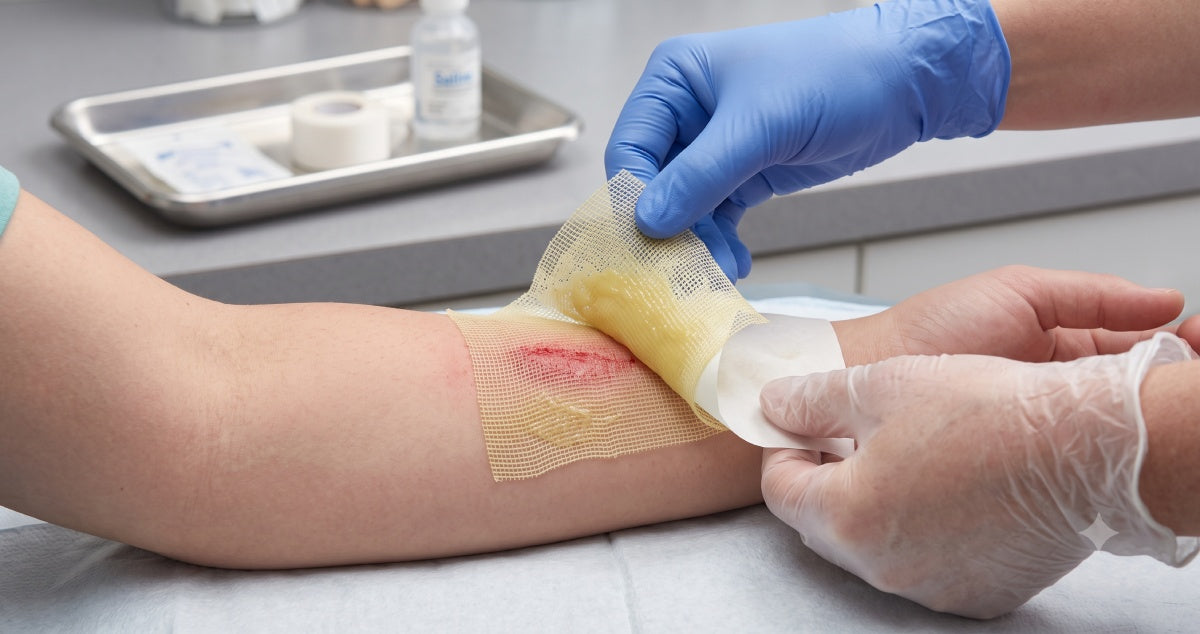
Sometimes the most confusing item on a wound care supply list isn't the treatment itself—it's the name. If your doctor or nurse recommended xeroform gauze and you found yourself wondering how it's different from the plain gauze already sitting in your first-aid kit, you're asking a very common question.
Although it looks similar to standard gauze, it's designed for a different purpose. Understanding when it's used can make wound care at home much easier.
What is xeroform gauze?
Xeroform gauze is a sterile, fine-mesh dressing impregnated with 3% bismuth tribromophenate in a petrolatum (petroleum jelly) base. That combination gives it two important characteristics:
-
A non-adherent surface: The petrolatum coating helps prevent the dressing from sticking to the wound bed, making dressing changes gentler and more comfortable.
-
Mild antimicrobial action: Bismuth tribromophenate helps reduce bacterial contamination at the wound surface.
It comes sterile, individually packaged, and in a range of sizes for different wound care needs.
Xeroform gauze (Medline CURAD)
https://medicalsupplygroup.com/products/medline-curad-sterile-xeroform-gauze-cur253590h
You can also browse the complete Gauze impregnated collection:
https://medicalsupplygroup.com/collections/gauze-impregnated
What makes it different from standard gauze?
Standard dry gauze is designed to absorb drainage, but as the wound begins to dry, it can stick to newly formed tissue. Removing it may disturb the healing surface, causing discomfort and sometimes slowing the healing process.
Xeroform gauze works differently. Its petrolatum coating helps maintain a moist environment where the dressing touches the wound, allowing it to lift away more easily during dressing changes.
This helps make dressing changes more comfortable, protects delicate new tissue, and supports a moist healing environment.
For these reasons, healthcare providers often choose xeroform gauze when protecting delicate healing tissue is a priority.
When is xeroform gauze typically used?
Xeroform gauze is commonly selected for wounds where keeping the dressing from sticking is just as important as protecting the wound itself. Depending on your healthcare provider's recommendations, it may be used for:
-
Minor burns, including many superficial and partial-thickness burns.
-
Skin graft donor sites, where protecting newly healing skin is especially important.
-
Post-surgical wounds, including certain small incisions and excision sites.
-
Abrasions and lacerations that benefit from a gentle contact layer.
-
Sensitive or high-friction areas, where repeated dressing changes could otherwise cause unnecessary discomfort.
Always use xeroform gauze exactly as directed by your healthcare provider.
What xeroform gauze is not used for
-
Heavily draining wounds, because it has low absorbency. An absorbent secondary dressing is usually needed to manage excess wound drainage.
-
Deep or tunnelling wounds, which require specialised wound care products and professional assessment.
-
Infected wounds, where medical evaluation and appropriate treatment are essential. The mild antimicrobial properties of xeroform do not replace treatment for an active infection.
-
Patients with specific product sensitivities. Always review the product labeling and follow your healthcare provider's recommendations before use.
Using the right dressing for the right type of wound helps support healing and reduces the risk of complications.
How to apply a xeroform gauze dressing
Always follow your healthcare provider's instructions for your specific wound.
-
Wash your hands thoroughly and put on clean nitrile or latex-free gloves.
-
Clean the wound with saline or as directed by your healthcare provider, then gently pat the surrounding skin dry with sterile gauze.
-
Open the xeroform package using sterile technique, avoiding contact with the dressing surface.
-
Place the xeroform gauze directly over the wound, ensuring the entire wound surface is covered.
-
Cover it with an absorbent secondary dressing, such as Gauze pads, if recommended.
-
Secure the dressing with Medical tape, making sure it is snug but not tight enough to affect circulation.
-
Change the dressing only as directed by your healthcare provider, since the schedule varies depending on the wound type and the amount of drainage.
Gauze pads
https://medicalsupplygroup.com/collections/gauze-pads
Medical tape
https://medicalsupplygroup.com/collections/medical-tape
Nonadherent pads
https://medicalsupplygroup.com/collections/nonadherent-pads
Shop xeroform gauze at Medical Supply Group
Medical Supply Group offers CURAD Sterile Xeroform Gauze along with impregnated gauze, standard gauze, nonadherent pads, medical tape, and other wound care essentials.
Xeroform gauze (Medline CURAD)
https://medicalsupplygroup.com/products/medline-curad-sterile-xeroform-gauze-cur253590h
You can also explore our complete All wound care collection:
https://medicalsupplygroup.com/pages/wound-care-supplies
Disclaimer: This article is for general educational and informational purposes only. Wound care decisions—including the selection of appropriate dressings—should be made with the guidance of a qualified healthcare provider. Do not use xeroform gauze or change your wound care routine without consulting your doctor or wound care specialist.
Published by the Medical Supply Group Team | medicalsupplygroup.com
Questions? Call us at (800) 278-0227 or email info@medicalsupplygroup.com