Standing up from a low toilet can be hard, whether the cause is a stiff knee or hip, recovery from surgery, arthritis or simply getting older. A raised toilet seat (also called a toilet seat riser, toilet riser or elevated toilet seat) adds height to the toilet you already have, so there is less bending and a shorter distance to stand up. This guide explains the types, how to choose the right height, whether you need arms or handles, how locking seats work, and how raised seats compare with toilet safety frames and rails.
Raised toilet seats at a glance
- What it does: adds height to your toilet, commonly about 2 to 6 inches. Our seats add 3.5 or 5 inches.
- Arms or handles: a raised seat with arms gives extra support for sitting and standing.
- Locking or non-locking: locking seats clamp to the bowl so they do not shift.
- Fit: check round vs elongated bowl and the weight capacity (typically 250 to 400 lb).
- Other options: toilet safety rails or a safety frame add support without changing the seat height.
- After surgery? Your surgeon or therapist will tell you which height and features you need.
What is a raised toilet seat?
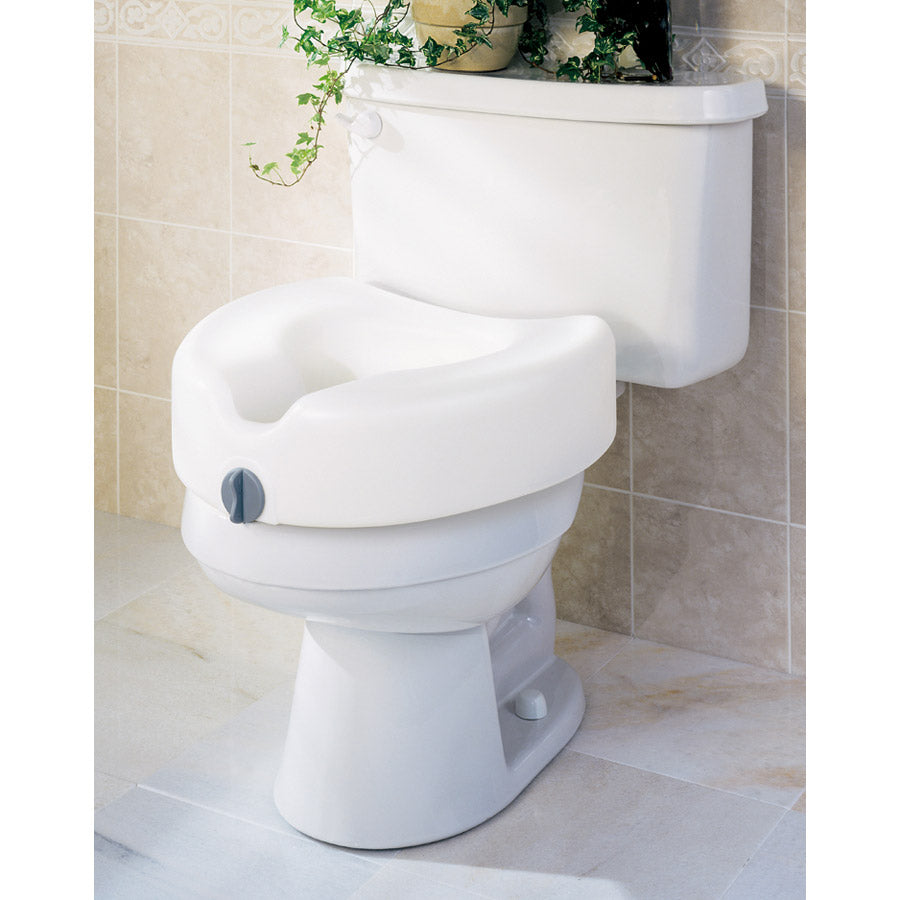
A raised toilet seat sits on top of your toilet bowl and raises the seat level. It is lighter and simpler than a commode, and it keeps the toilet where it is. People often choose one when bending, sitting and standing are difficult, after hip or knee surgery when advised, or for arthritis and limited mobility. Many models are shaped to be easy to clean.
Types of raised toilet seats
| Type | What it is | Often chosen when | Examples from our range |
|---|---|---|---|
| Without arms | A simple riser that adds height | Support is not needed, or rails or a frame are used | Contoured 5 inch raised toilet seat, Guardian locking raised toilet seat |
| With arms or handles | A riser with built-in or padded arms | Extra help is needed to sit down and stand up | Elevated toilet seat with arms |
| Locking | A clamp or mechanism secures it to the bowl | The seat should not shift during use or transfers | Elevated locking seat with arms, Guardian locking raised toilet seat |
| Hinged | A hinged design allows access for cleaning | Easy cleaning matters | Hinged elevated toilet seat (3.5 inches, standard and elongated) |
| Safety rails or frame | Arms that do not change the seat height | Support is needed, but the height is fine | Toilet safety rails, Deluxe toilet safety support |
Browse all raised toilet seating.
How high should a raised toilet seat be?
Raised seats commonly add about 2 to 6 inches. A standard toilet seat sits about 15 inches from the floor, so a 5 inch riser brings it to about 20 inches.
| Added height | Often chosen when |
|---|---|
| About 2 to 3.5 inches | A small boost is enough, for example for mild stiffness |
| About 4 to 5 inches | A common choice for many adults who find a standard toilet too low |
| About 6 inches | A bigger lift is needed. Make sure feet still rest on the floor. |
With arms or without? Handles explained
With arms or handles
The arms give you something to push up from. Look for padded arms and a locking mechanism.
Without arms
Simpler and often lighter. Many people pair it with toilet safety rails or grab bars.
Locking vs. non-locking seats
Locking seats use a clamp or lock to secure the seat to the toilet bowl, so it does not shift while you sit or stand. Non-locking seats rest on the bowl and rely on their shape and brackets. A locking seat is generally the more secure choice if the seat will be used for transfers.
Will it fit your toilet?
- Bowl shape: round or elongated. Some seats come in both.
- Opening size: check that the opening suits the user.
- Weight capacity: our seats carry 250 to 400 lb. Check each product.
- Seat width: make sure it is comfortable for the user.
- Lid clearance: check whether the toilet lid will still close or needs to be removed.
- Locking mechanism: check that it suits your bowl.
Check the product description for compatibility.
Raised toilet seat vs. safety frame vs. safety rails
| Option | What it does | Often chosen when |
|---|---|---|
| Raised seat with arms | Adds height and arms in one product | Both height and support are needed |
| Toilet safety rails | Arms mounted to the bowl, with adjustable height | Support is needed on your existing toilet |
| Toilet safety frame | A freestanding frame with arms that rest on the floor | Support is needed without attaching to the toilet |
| Raised seat plus grab bars | Height from the seat, support from wall bars | Wall bars can be installed |
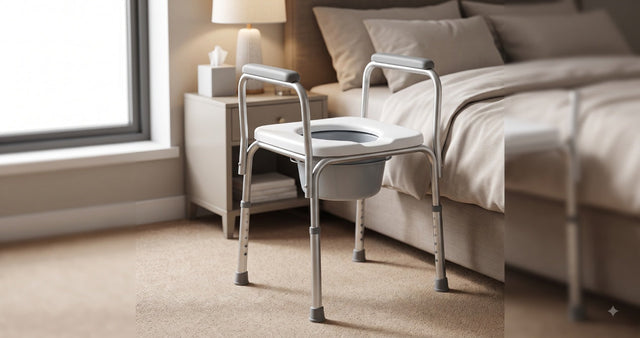
See toilet safety rails, the freestanding deluxe toilet safety support and bathtub rails and grab bars. Also see our bedside commode guide, since a 3-in-1 commode can work over the toilet.
How to install a raised toilet seat
Installation varies by model, so follow the instructions that come with the seat. In general: lift or remove the existing seat if the instructions say to, position the riser on the bowl, tighten or lock the clamp as directed, and press down on it to check that it does not move before use.
Safety tips
- Check that the seat is firmly in place before every use.
- Do not exceed the weight capacity.
- Do not use a towel rack or sink as a handhold.
- If you are recovering from surgery, follow your surgeon’s and therapist’s instructions.
Cleaning a raised toilet seat
Clean with a suitable household cleaner, following the manufacturer’s instructions. Smooth contoured and hinged designs are easier to clean.
Raised toilet seats: frequently asked questions
▾What is a raised toilet seat?
A raised toilet seat is a seat that sits on top of your toilet bowl to raise the seat level, so there is less bending when you sit down and stand up.
▾What is the difference between a raised toilet seat and a toilet seat riser?
They are the same thing. Raised toilet seat, toilet seat riser, toilet riser and elevated toilet seat all describe a seat that adds height to a toilet.
▾How high should a raised toilet seat be?
Raised seats commonly add about 2 to 6 inches. Choose a height so that your feet still rest flat on the floor when you are seated. Ask your therapist if you are unsure.
▾Do I need a raised toilet seat with arms or handles?
Arms or handles give you something to push up from. They help if you need extra support. If you only need height, a seat without arms may be enough, and you can add toilet safety rails or grab bars.
▾What is a locking raised toilet seat?
A locking seat has a clamp or lock that secures it to the toilet bowl so it does not shift while you sit or stand.
▾Will a raised toilet seat fit a round or elongated toilet?
It depends on the model. Some come in both standard (round) and elongated versions. Check the product description for compatibility.
▾What weight capacity do raised toilet seats have?
Our seats carry 250 to 400 lb. Always check the stated weight capacity of the specific product.
▾Do I need a toilet safety frame or rails instead?
If height is fine but you need support to sit and stand, safety rails or a freestanding safety frame may be enough. If you need both, a raised seat with arms, or a raised seat plus rails, can work.
▾Can I use a raised toilet seat after hip or knee replacement?
Many people do, but your surgeon or therapist will advise on the height and features you need.
▾Are raised toilet seats covered by insurance?
Coverage varies, and raised toilet seats are often not covered. Check your benefits.
Shop raised toilet seats and safety rails
Medical Supply Group offers raised toilet seats in several heights and styles, along with safety rails and frames, for different home-care needs.


Browse more:
Raised toilet seatingCommodesBath safetyBathtub rails & grab barsChairs & benches for bathing
Not sure which raised toilet seat fits?
Tell us who it is for, your toilet shape and the height you need, and our team will help you choose.
Call (800) 278-0227Shop raised toilet seatsPublished by the Medical Supply Group Team | medicalsupplygroup.com
Last reviewed: November 2026
Questions? Call us at (800) 278-0227 or email info@medicalsupplygroup.com