
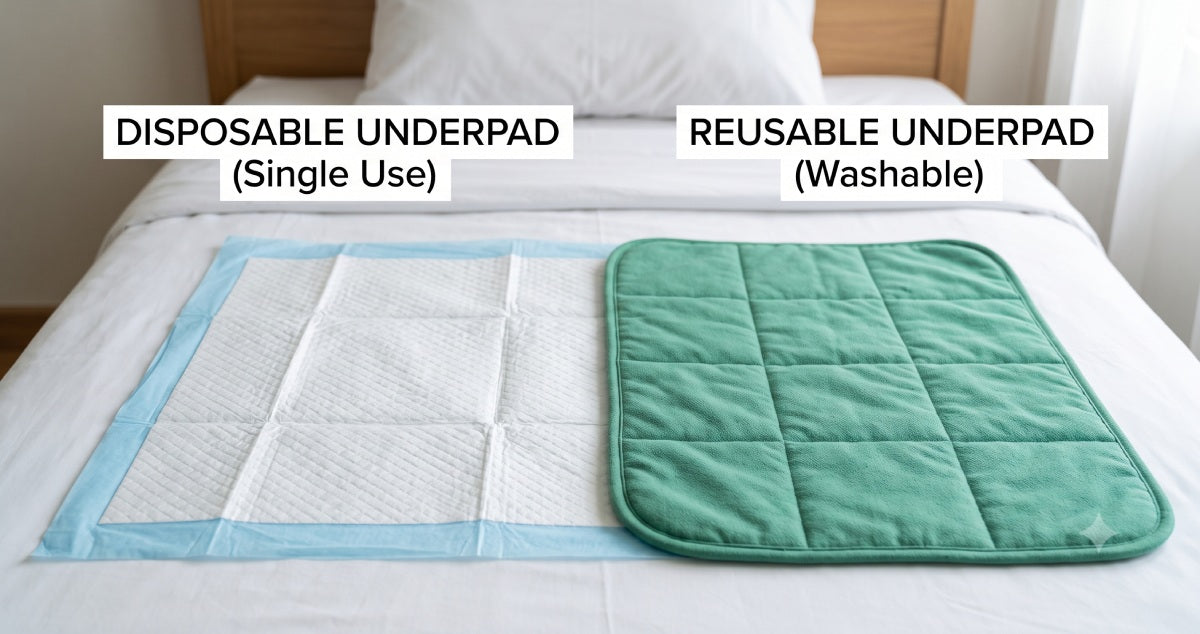
One pad goes into the trash after use. The other goes into the laundry. When you're choosing underpads for everyday care, that small difference can have a surprisingly big impact on cost, convenience, and your daily routine.
What are underpads and what are they used for?
Underpads, also called chux pads or bed pads, are absorbent protective pads placed on beds, chairs, and other surfaces. They help protect mattresses and furniture from moisture while making cleanup easier. They are commonly used for incontinence, recovery after surgery, and for people with limited mobility.
Disposable underpads — when they make sense
Disposable underpads are designed for single use, with an absorbent core and waterproof backing. They can be a practical choice when convenience matters most.
They make sense for:
-
Frequent changes throughout the day
-
Travel, hospital stays, or situations without laundry access
-
Temporary recovery or short-term illness
-
Situations where quick cleanup is a priority
For caregivers managing several changes a day, avoiding another load of laundry can be a real time-saver.
Shop disposable underpads for beds and chairs
Reusable underpads — when they make sense
Reusable underpads are washable fabric pads designed for repeated use. They require more care but can reduce the cost per use over time.
They are especially useful for:
-
Long-term, ongoing home use
-
Families with regular access to a washing machine
-
Lighter to moderate leakage
-
Reducing disposable waste
Keeping two or three reusable pads in rotation can make laundry easier to manage.
Shop reusable underpads for beds or chairs
Side-by-side comparison
|
Feature |
Disposable |
Reusable |
|
Cost per use |
Higher |
Lower over time |
|
Laundry required |
No |
Yes |
|
Heavy leakage |
Many high-absorbency options |
Often paired with a brief |
|
Travel |
More convenient |
Less practical |
|
Long-term use |
Higher ongoing cost |
Lower ongoing cost |
Can you use both?
Absolutely. You don't have to choose one type for every situation. Many families use reusable pads at home during the day and keep disposables available for travel, overnight care, or days when laundry simply isn't practical.
For additional protection, an underpad can also be used with adult protective underwear. Depending on individual needs, bladder pads and liners can provide another layer of incontinence protection.
How to choose the right size
Common sizes include:
-
23" × 36" — chairs and smaller coverage areas
-
30" × 36" — a practical general-purpose bed size
-
36" × 36" and larger — wider coverage
When choosing between sizes, consider the surface being protected and how much movement occurs during use. A larger pad may provide more useful coverage when shifting or repositioning is common.
Shop underpads at Medical Supply Group
Whether you prefer the convenience of disposable pads or the long-term value of washable protection, the right choice should fit your routine as much as the user's needs.
Explore the full incontinence supplies collection to compare underpads and other protection options for home care.
Disclaimer: This article is for general educational purposes only. Product selection for individuals with complex incontinence or skin integrity concerns should be guided by a healthcare provider or continence specialist.
Published by the Medical Supply Group Team | medicalsupplygroup.com | (800) 278-0227