
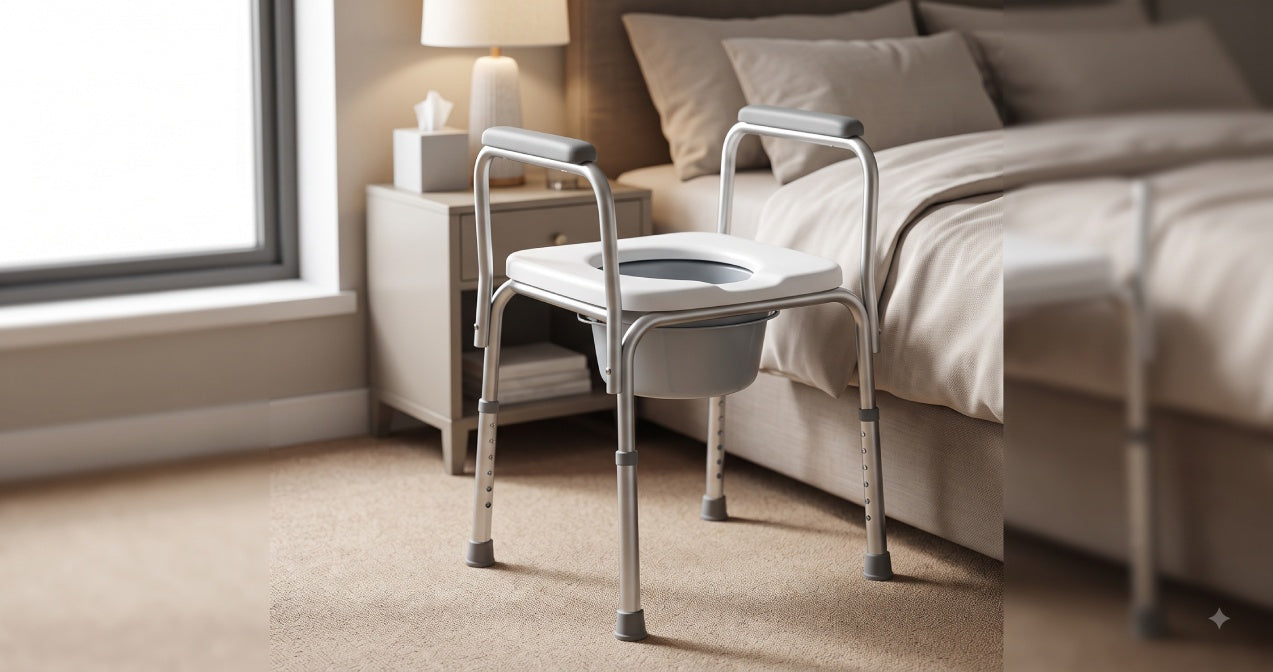
A bedside commode can make a surprisingly big difference at home. Whether someone is recovering from surgery, struggling with nighttime bathroom trips, or simply moving less easily than before, having a toilet nearby can make daily routines feel safer and less stressful.
What is a bedside commode and who needs one?
A bedside commode is a portable toilet that can be placed near a bed or in another convenient location. It usually includes a frame, seat, armrests, and a removable bucket.
A bedside commode may be useful after surgery, during recovery from a hip or knee replacement, for older adults with limited mobility, or whenever reaching the bathroom is temporarily difficult. Choosing one proactively can make home care more manageable rather than waiting until a bathroom trip becomes a challenge.
Types of commodes
Standard bedside commodes
Standard models typically include adjustable legs, armrests, a seat, and a removable pail. Some also fold for storage. They are a practical choice for many adults looking for a medical commode at home.
Drop-arm commodes
Drop-arm models have armrests that swing down or away. This design can make lateral transfers from a bed or wheelchair easier for someone who cannot safely stand and pivot.
Bariatric commodes
Bariatric commodes feature reinforced frames, wider seats, and higher weight capacities, typically around 350–600 pounds. Always check the manufacturer's stated weight capacity before purchasing.
Commode-shower chair combinations
These models combine a commode with a shower chair, making them useful when someone needs bathing support as well as a portable toilet.
Key features to look for
-
Weight capacity: Check this first and choose a model that safely accommodates the user's weight.
-
Height adjustment: Adjustable legs help create a comfortable sitting and standing position.
-
Armrest type: Fixed arms provide support, while drop arms can make transfers easier.
-
Bucket and lid: A removable bucket with a secure lid makes emptying and cleaning more manageable.
-
Frame stability: The commode should sit firmly without wobbling before use.
How to measure for the right height
When seated, the user's feet should rest comfortably on the floor, with the knees positioned at roughly a right angle. Measure from the floor to the crease behind the knee while wearing usual footwear, then compare that measurement with the commode's adjustable height range.
For everyday use, place the commode on a stable, non-slip surface and follow the manufacturer's cleaning instructions. If the person has specific transfer or mobility concerns, a healthcare professional or occupational therapist can help determine the safest setup.
Shop commodes at Medical Supply Group
Medical Supply Group carries standard, drop-arm, and bariatric commodes for different home-care needs.
👉 Shop bathtub rails and grab bars
Disclaimer: This article is for general educational purposes only. If selecting a commode for a patient with specific medical needs — bariatric requirements, post-surgical restrictions, or complex mobility limitations — consult a healthcare provider or occupational therapist.
Published by the Medical Supply Group Team | medicalsupplygroup.com | (800) 278-0227